


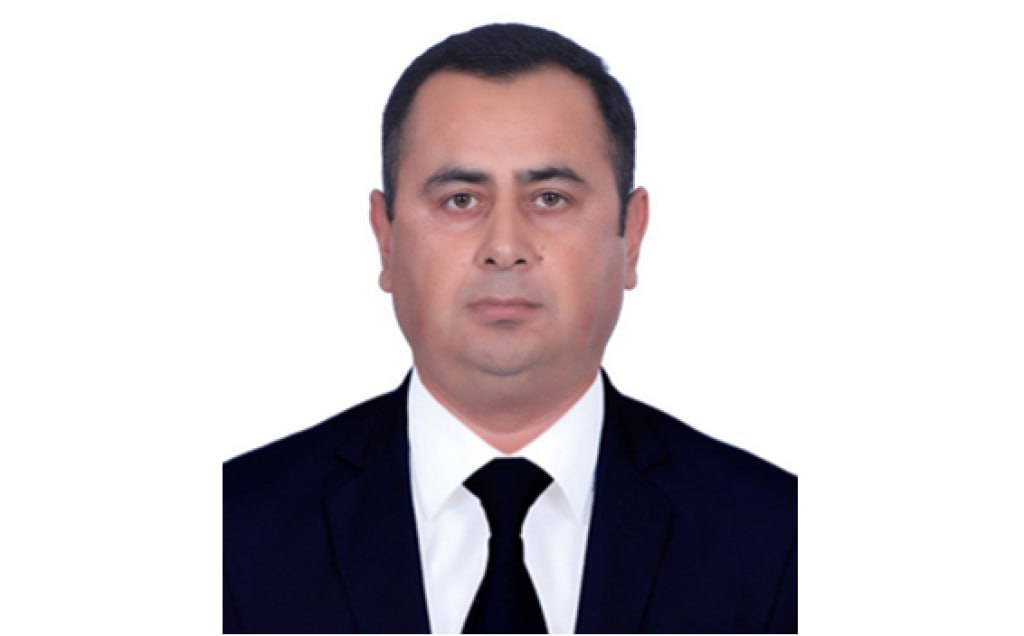
Head of the Department of Computer and Software Engineering
Umid Jumayevich Hasanov
Tuesday, Thursday and Saturday from 2:00 PM to 4:00 PM.
+998933004101
History and Activities of the Department of "Computer and Software Engineering"
History and Formation
The department was established in 1992 as the "Informatics" department under the "Higher Mathematics" faculty. Candidate of Technical Sciences, Associate Professor Abdumannop Abdukarimov served as the first head of the department. Over the years, the department has become a core academic unit, training highly qualified specialists in the fields of technological processes and software engineering.
Faculty and Staff
Today, the department is composed of experienced and highly qualified professionals dedicated to student excellence. The faculty includes:
• Head of Department: (PhD), Acting Associate Professor U.J. Hasanov
• Associate Professors: PhD B.N. Qo’ziyev, PhD K.G. Jabborov, (PhD) Sh.U. Eshonqulov, N.A. Qarshiboyev
• Acting Associate Professors: Z.Z. Ibragimov, A.A. Guliyev, F.U. Xuramova
• Senior Lecturers: Z.A. Iskandarova, N.A. Ibragimova, A.U. Burliyev
• Assistants: I.I. Tovboyev, A.L. Ne’matov
• Department Registrar/Laboratory Assistant: M.E. Yakubova
Scientific and International Activities
In March 2025, the department successfully hosted a prestigious international scientific-practical conference titled "Innovative Technologies in the Digitalization of Higher Education: Problems and Solutions." The event featured participation from leading scientists and professors from Germany, Norway, India, Russia, Kazakhstan, and Tajikistan.
The department places high priority on developing international relations. Currently, active exchange programs and collaborations are established with the following institutions:
• INHA University (South Korea)
• Sambhram University (India)
• Institute for Energy Technology (Norway)
• Kazan Federal University (Russia)
• M. Kozybayev North Kazakhstan University (Kazakhstan)
Infrastructure and Facilities
Educational processes are supported by modern infrastructure:
• 1 Specialized laboratory;
• 4 Modern computer labs;
• A lecture hall with a 60-seat capacity.
All classrooms are equipped with interactive electronic boards, high-speed internet, and technologies facilitating distance learning. Currently, the department trains highly skilled personnel in the following degree programs:
• 60711400 – Automation and Control of Technological Processes and Production;
• 60610300 – Computer Engineering;
• 60610400 – Software Engineering.
Strategic Objectives and Measures for the 2025-2026 Academic Year
For the upcoming academic year, the department team has set the following priority goals to enhance educational quality and scientific potential:
1. Transformation and Digitalization of the Educational Process
• AI Integration: Introducing Artificial Intelligence (AI) and Data Science elements into the curricula of all core subjects.
• Hybrid Learning Model: Upgrading resources on distance learning platforms and converting 100% of video lectures and lab works into digital formats.
• Cloud Technologies: Implementing practical training sessions for students using cloud computing environments (Google Cloud, AWS, or Azure).
2. Research and Innovation
• Academic Potential: Supporting faculty members in the defense of at least 3 doctoral dissertations (PhD and DSc).
• International Publications: Increasing the number of articles published in high-impact journals (Scopus and Web of Science) by 40%.
• Grants and Projects: Securing at least one international (Erasmus+, Horizon Europe) or national scientific research grant.
3. International Cooperation and Academic Mobility
• Double Degree Programs: Expanding joint undergraduate and graduate programs with INHA University (Korea) and Kazan Federal University (Russia).
• Visiting Professors: Hosting at least 5 international professors for online and offline guest lectures throughout the year.
• Student Mobility: Establishing systematic short-term internships for talented students at partner universities abroad.
4. Modernization of Material and Technical Base
• Smart Classrooms: Establishing a specialized "Artificial Intelligence and Robotics" center equipped with next-generation GPU servers.
• VR/AR Laboratory: Developing Virtual and Augmented Reality stands to model complex technological processes.
5. University–Industry Integration
• Industrial Clusters: Establishing department branches within major regional industrial enterprises to align graduation theses with real-world production challenges.
• Certification Center: Launching preparatory courses for students to earn international professional certifications (Cisco, Microsoft, Oracle).
Jizzakh Polytechnic Institute
institute
Jizzakh city, 130100
Islom Karimov shox ko’chasi 4 uy
 Phone: +998 72 226-46-05
Hotline: +998 72 226-45-57
 Email: dgpi_info@edu.uz